
Root Canals
Comfort‑Focused Treatment to Save Your Tooth
Many people delay treatment because they are afraid of root canals, even when they are in severe pain. Unfortunately, an untreated tooth infection will only worsen over time and may eventually require extraction. Prompt care is the best way to save your tooth and protect your health.
Root Canals Relieve Pain
Root canals have a reputation for being painful, but the procedure itself is not what patients remember. It is the intense toothache caused by the infection that creates fear.
A root canal does not cause pain. It removes the source of the pain. Once your tooth is numb, the throbbing discomfort disappears. You may feel mild soreness for a day or two afterward, but the severe infection and toothache are gone.
Why Root Canals Are Necessary
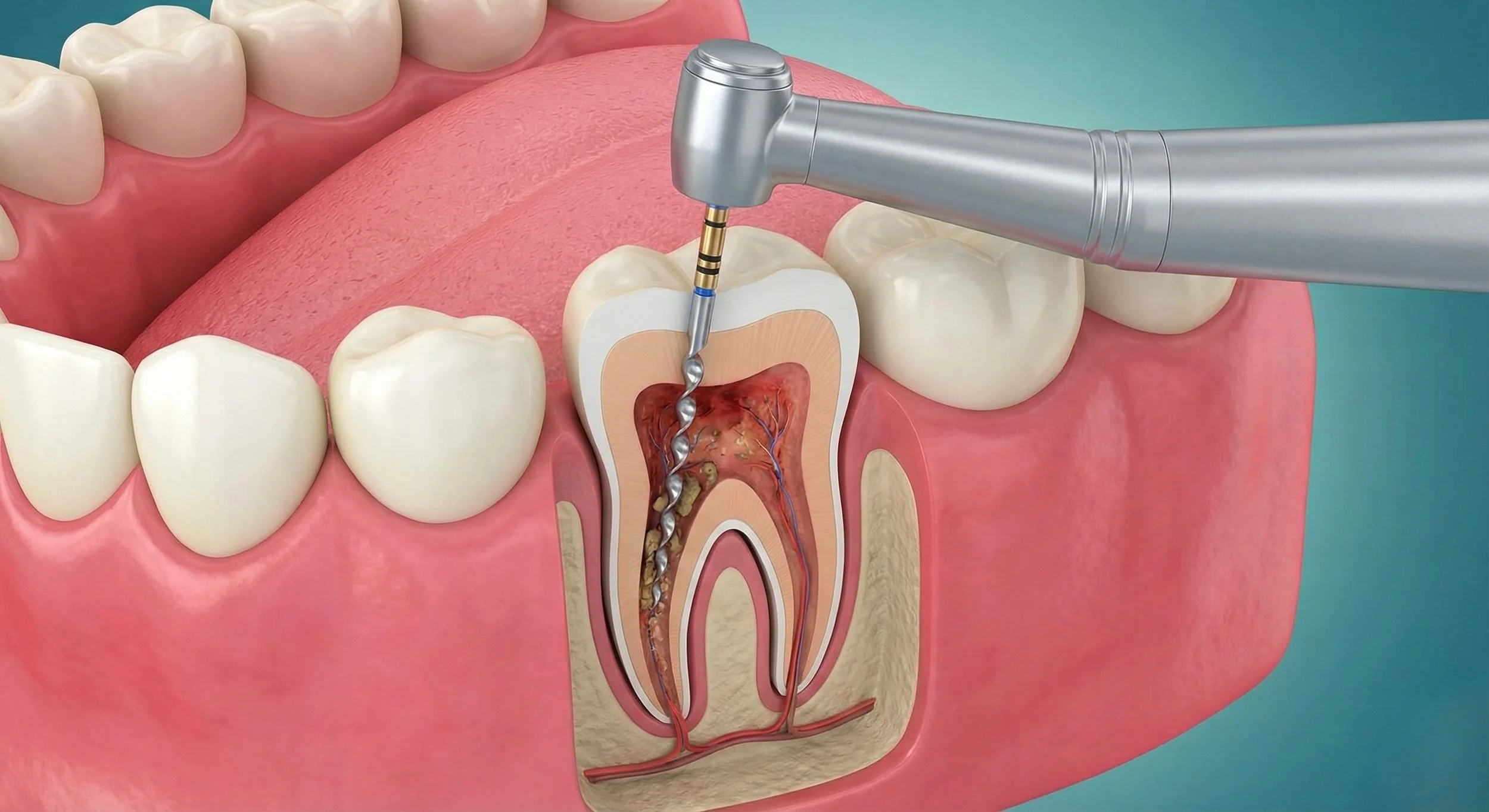
Inside each tooth is a space called the pulp chamber. It contains nerves, blood vessels, and tissue that keep the tooth alive. When bacteria enter this space through a deep cavity, crack, or injury, an infection or abscess can develop. Because the pulp is so close to the nerves, this infection can be extremely painful.
A root canal allows Dr. Pedraum Heydari to remove the infected pulp, clean the inside of the tooth, and stop the infection from spreading.
Signs You May Need a Root Canal
Common symptoms of a tooth infection include:
• Severe or persistent tooth pain
• Jaw pain or swelling
• Sensitivity to heat, cold, or pressure
• A raised bump or pimple on the gums
• Swollen or inflamed gums
• A foul taste or odor in your mouth
If you notice any of these symptoms, contact us right away. An infected tooth is a serious dental emergency that requires prompt treatment.
A Stress‑Free, Pain‑Free Experience
We understand that root canals can feel intimidating. Our team is committed to making your visit as comfortable as possible.
• Strong local anesthetics fully numb the tooth
• You may feel pressure, but not pain
• Nitrous oxide sedation is available for added relaxation
Once your tooth is numb, Dr. Heydari creates a small opening to remove the infected pulp using advanced rotary endodontic technology. The cleaned space is filled with a rubber‑like material called gutta‑percha, then sealed with a temporary filling.
Restoring Your Tooth After Treatment
Your tooth needs about two weeks to heal. At your follow‑up visit, Dr. Heydari will determine whether a dental crown or filling is the best way to protect and strengthen the tooth long‑term.
Don’t Delay Root Canal Treatment
You do not need to suffer through the pain of an infected or abscessed tooth. If you are experiencing symptoms, contact 12 Dentistry to schedule an emergency appointment with Dr. Heydari. We are here to provide the relief and care you need.